
Whether you're writing an email, a report, a social media post, or an essay, clarity is king. Clear writing isn't about using big words; it's about making your message easy to understand. The good news is that it's a skill you can learn. Here are five simple rules to make your writing instantly clearer and more powerful.
1. Use the Active Voice
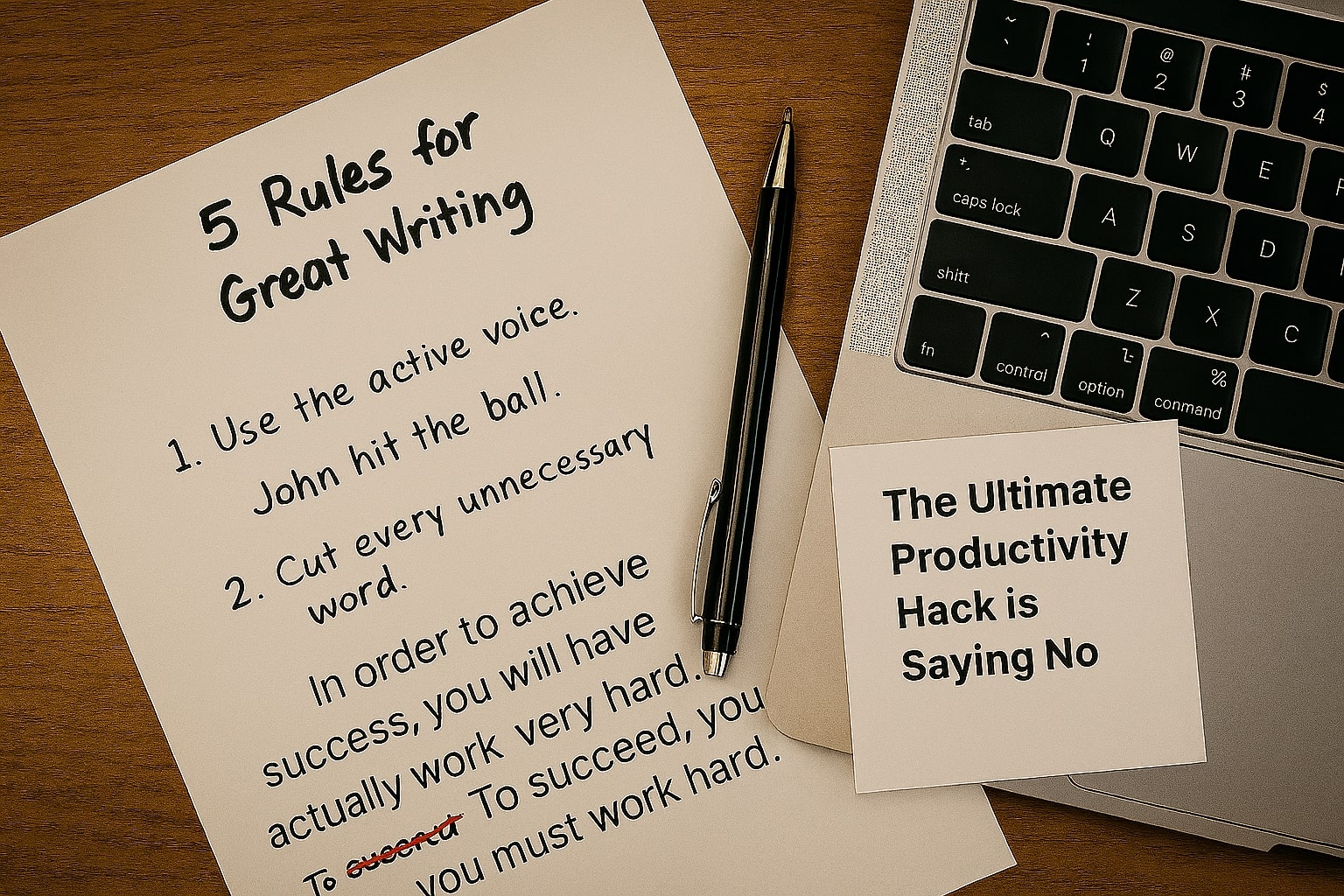
The active voice is direct, energetic, and clear. The subject of the sentence performs the action. The passive voice is often wordy and indirect.
- Passive: The ball was hit by John. (5 words)
- Active: John hit the ball. (4 words)
Notice how the active sentence is shorter and more direct? Scan your writing for phrases like "was done by" or "is considered to be" and see if you can rephrase them in the active voice.
2. Cut Every Unnecessary Word
Good writing is concise. Many of us use "filler words" that add length but no meaning. Challenge yourself to remove them.
- Wordy:
In order to achieve success, you will have to actually work very hard.(13 words) - Concise:
To succeed, you must work hard.(6 words)
Common filler phrases include "in order to," "due to the fact that," "actually," and "very." A great way to practice is to paste your text into our Online Text Editor, check the word count, then try to cut it by 20% without losing the core message.
3. Write Short Sentences
Long, complex sentences are difficult to follow, especially on a screen. Break down complex ideas into shorter, simpler sentences. A good rule of thumb is to aim for an average sentence length of 15-20 words. If you have a sentence that's 35 words long, it can almost always be split into two.
Use the sentence counter in our text tool to keep an eye on your average length.
4. Use Simple, Everyday Words
Using complex words to sound intelligent often has the opposite effect: it makes your writing confusing. Don't use "utilize" when "use" works perfectly. Don't say "ameliorate" when you can say "improve." Clear communication is more impressive than a large vocabulary.
5. Read It Aloud
This is the ultimate test for clarity. Read your writing out loud. If you stumble over a sentence, run out of breath, or it just sounds awkward, it needs to be rewritten. Your ear will often catch confusing phrases that your eyes miss. This simple habit will transform the flow and readability of your work.
By focusing on these five rules, you can make your writing more effective, professional, and persuasive. Open up a text editor and start practicing today!